
How Many Seats in a Tempo Traveller? The Range, and How to Pick Yours
Tempo travellers run from nine seats to twenty-six. A straight look at the layouts, what the seat count really means for comfort, and when a smaller van is the cheaper mistake.

Tempo traveller is not one vehicle. It is a family of them, and the seat count moves more than most people expect.
Ask a rental desk how many seats a tempo traveller has and a straight answer is a range. Nine to twenty-six, across our fleet. Anyone who names one number is describing the single van parked outside their own office.
Here is what decides the number, and how to pick yours without paying for empty seats.
A tempo traveller is a van body on a light truck chassis. The shell barely changes. What changes is the seating bolted inside — bench widths, aisle space, whether the last row faces forward or sits over the rear axle. That interior is where the seat count lives.
The range, van by van
Nine or twelve in the Winger AC, at ₹2,600 a day.
Ten, twelve, seventeen, nineteen and twenty-six in the Executive Tempo line, from ₹2,800 up to ₹5,300 a day.
Ten, twelve and fifteen in the Premium Tempo range, ₹3,400 to ₹3,900 a day.
Ten or fifteen in the Urbania, our newest vans, ₹5,500 to ₹6,000 a day.
So nine to twenty-six. That is the honest span.
The layout nobody asks about
Two vans with the same seat count can feel nothing alike after eight hours, because there are three ways to arrange those seats.
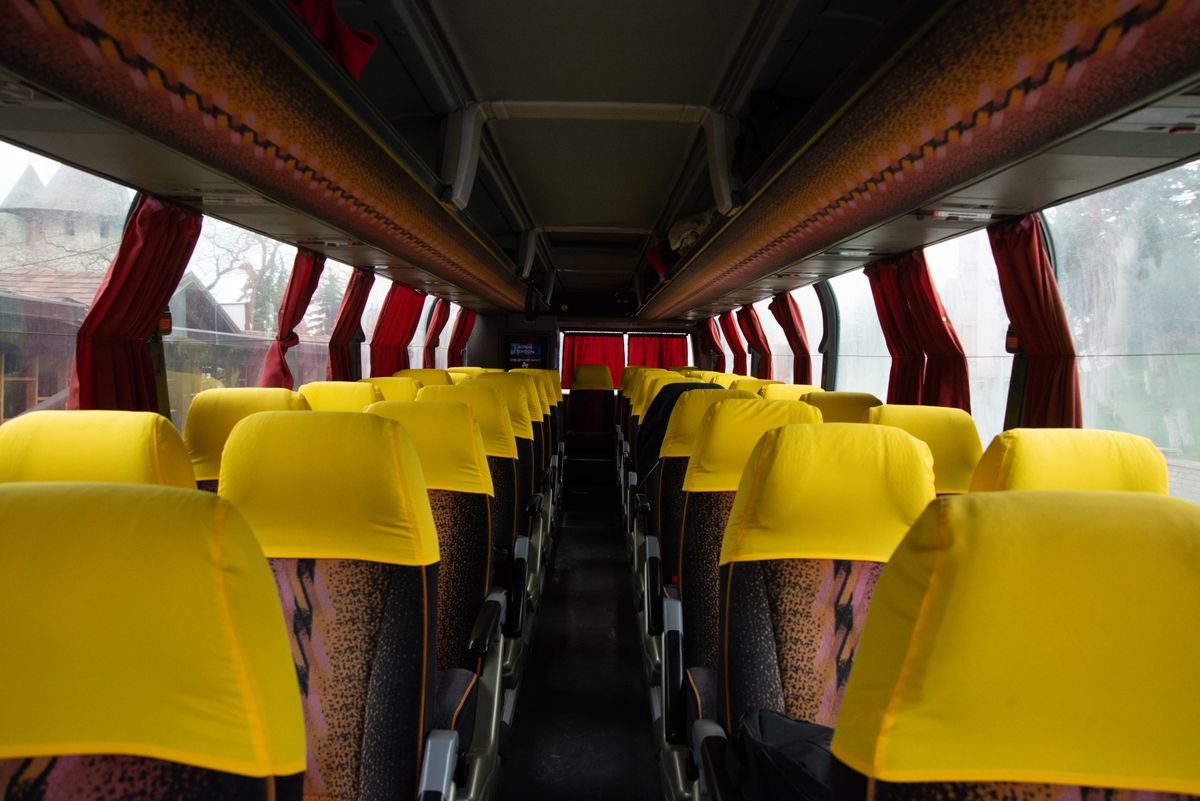
Forward-facing bench rows are the standard, and what you get unless you ask for something else. A last row sitting over the rear axle is the cramped one — it rides hardest and it is the one that feels every pothole on the Thekkady road. A facing layout, where a middle pair turns to share the space, is what families with children tend to want, and it trades legroom for company.
Ask which arrangement you are being quoted for. It is a fair question and it takes ten seconds to answer.
Why “seater” is not the same as “comfortable”
This is the part that catches groups out.
A twelve seater carries twelve passengers plus the driver. Fill all twelve seats and there is room for hand luggage only. The rear bench sits over the axle, so it rides harder than the rest of the cabin and is the last row to cool down when the AC is working hard on a ghat climb.
Ten people in a twelve seater is a different trip. Bags go behind the last row. Someone can stretch. It is the same van and a better journey.
How to pick
Count your people, then add one. Not to be generous — to cover the cousin who confirms late.
Then count bags. A group of twelve with twelve hard-shell suitcases is a seventeen-seater job. Twelve with soft bags is fine in twelve.
For a short hop, like the 76 km run to Alleppey, a seat squeeze for an hour is tolerable. For Munnar, 111 km and most of it on ghat bends, it is not. Nobody wants to be the one in the back row on the Adimali climb.
Two worked examples, because the maths is usually obvious once it is written down.
Nine cousins from around Kothamangalam, three days in Vagamon, soft bags. The Winger 12 at ₹2,600 a day is the answer — 95 km out, no ghat drama, a seat each.
The same nine, but every one brings a hard case and the plan adds a Munnar stop. Now it is the Executive Tempo 17 at ₹3,300 a day, because the Adimali climb punishes a loaded van.
One more thing worth stating plainly. The driver is not one of your seats. When we say twelve, we mean twelve of you and our driver, not eleven of you and him.
Adding seats you might not need
Here is a case against oversizing. A nineteen seater costs ₹4,600 a day where a twelve seater costs ₹3,000. You are paying ₹1,600 a day for seats nobody sits in, plus ₹5 more per extra kilometre. Driver allowance is ₹700 either way. On a four-day trip that gap is real money.
The bigger van is justified when the count is close. A group of sixteen should take the seventeen seater, not two twelves.
When a tempo traveller is the wrong call
Under eight people, do not book one. A sedan or an Innova does the same trip for less, parks easier in the Fort Kochi lanes, and carries a lower driver allowance. Five friends going to Vagamon do not need a tempo traveller. It is the wrong tool for that job.
Above twenty-six, you are looking at a bus, and we will say so rather than stretch a van past what it can carry.
Comfort is the thing a bigger van does not fix. Four people in a seventeen seater get empty rows, not a better ride — the same seat, at ₹3,300 a day where the twelve costs ₹3,000. Buy space when you need space.
Booking
Tell us your headcount and your route and we will name the van. Not the biggest one. The right one.
Call +91 70343 01815, or book online, and we will confirm the seat count against your actual list before anything is paid.
Rates are indicative and move during peak festive days. Your final quote comes from our team against your itinerary — kilometres counted garage to garage, driver allowance and any interstate permit shown separately so nothing hides inside one number.
Common questions
- How many seats does a tempo traveller have in India?
- Nine to twenty-six across our fleet. The common sizes are 9, 12, 17, 19 and 26 seats, and the 12 seater is the one most groups book.
- Is a 12 seater tempo traveller the same as a 12 seater Winger?
- Both carry twelve, but they are different vans with different interiors. The Winger is ₹2,600 a day and the Executive Tempo 12 is ₹3,000. Ask which one your quote is actually for.
- How many people fit comfortably in a tempo traveller?
- Two fewer than the seat count, as a rule. Ten people in a twelve seater leaves the rear bench free for luggage. Twelve in a twelve seater means bags on laps.
- Can I book a 26 seater tempo traveller in Kochi?
- Yes. It is ₹5,300 a day with 100 km included and ₹30 per extra km. It suits a group in the mid-twenties and is far too much van for a group of eighteen.
Book this trip
Send us your dates and group size and we will confirm the van and the rate.